
Are you ready to meet your next level? Click here to book your free discovery call
Vitamin A – is your child getting enough?
April 14, 2026
Vitamin A deficiency is rare in the UK, but recent evidence around poor dietary intakes of foods rich in vitamin A in the early years and teens, as well as case reports of deficiency are on the increase. It is a signifiant problem worldwide, especially in global south, and is the most common preventable cause of blindness in the world. Infants, young children and pregnant women are most at risk. The UK Department of Health & Social Care recommends Vitamin A, C and D supplements for all children from 6 months to 5 years. Free vitamins can be accessed for supported families on low incomes. In this 10-minute blog, I will share more about:
- Food Sources of Vitamin A
- Expressing daily needs for Vitamin A
- Reports on low intakes of Vitamin A
- Limited fortification of foods with Vitamin A
- Vitamin A essential for health
- Vitamin A supplements and take aways
1. Food Sources of Vitamin A
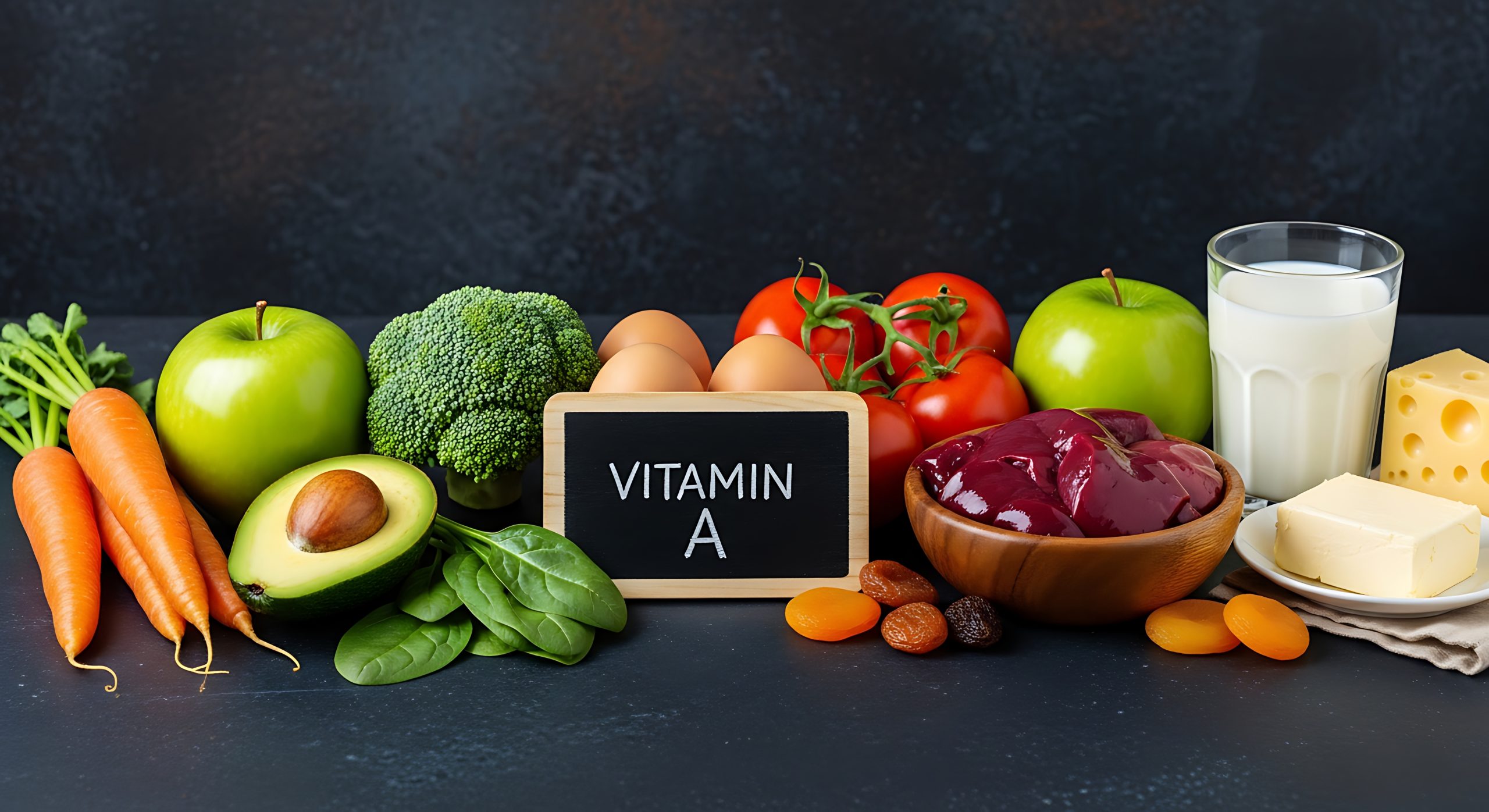
Vitamin A comes from both plants and animals; beta-carotene from plants provides one sixth the potency of retinol, the animal source of Vitamin A. Full fat diary products like yoghurt and cheese, plus oily fish and egg yolks are good daily sources of retinol and with butter and cream additional excellent sources, and eaten in moderation. Liver and cod liver oil are both extraordinarily high in retinol, and as a fat-soluble vitamin, humans and animals store Vitamin A in body tissues, primarily the liver. Pregnant women and those planning pregnancy should avoid eating liver or cold liver oil, as high blood levels of retinol, can risk affecting a developing foetus. However, during pregnancy and lactation needs for Vitamin A are increased. Vitamin A-rich foods plant sources include orange-coloured fruits and vegetables like carrots, pumpkin, sweet potato, mango, cantaloup melon and apricots, also greens like kale, spinach and peas. For maternal diets excluding cow's milk and products, with infants with Cow's Milk Allergy, a vitamin supplement containing sufficient Vitamin A is essential. Find out more details here on Food Sources of Vitamin A
2. Expressing daily needs for Vitamin A
We often now think about Vitamin A as "retinol-equivalents or RE" to give one figure taking account of the difference in potency from retinol and beta-carotene. Vitamin A is also expressed as International Units or IU, each IU is equivalent to 0.3ug of RE. Most supplement labels will express both, but foods are unlikely to mention Vitamin A content on labels. Special consideration is given during pregnancy due to the risk of high blood levels of Vitamin A as retinol. The market leading brand of vitamins for conception, pregnancy and breastfeeding contain no Vitamin A, and so food sources are most important.
- Infants from 6 month 350ug RE
- Young children aged 1-5 years 400ug RE
- Children aged 7-10 years 500ug RE
- Teens aged 11-18 years 600ug RE
- Lactation 1,000ug for first 6 months; 700ug thereafter RE
3. Reports on Low Intakes of Vitamin A
The Scientific Advisory Committee on Nutrition's 2024 Report Feeding Young Children aged 1-5 years reports low intakes for Vitamin A in low wage families, with only 10% uptake of of free vitamins A, C and D.
4. Limited Fortification of foods with Vitamin A
Alternative dairy products eg. plant milks, cheese, yoghurt and spreading fats contain little or no vitamin A. Soya milks and their products are not a naturally rich source of Vitamin A, and market leading brands do not routinely fortify. There is no longer a mandate in the UK to fortify foods with Vitamin A. Some manufacturers add beta-carotene for colour eg. in plant based margarines, but the Vitamin A content is negligible. Vegan cheese substitutes contain little or no vitamin A. Finally, there is no longer routine fortification of low fat dairy milk such as skimmed or semi-skimmed in the UK. So, understanding the role of vitamin A, its best food sources, and how much we need is an important part of nutrition know-how and self-care.
5. Essential Vitamin A
There is increasing incidence of Vitamin A deficiency in UK children and children living in the UK, particularly for children with longterm restricted diets eg. those with ARFID and Autism. As Dietitians, we are seeing increasing case reports of preventable blindness presenting in children with highly restrictive diets, as a result of identified Vitamin A deficiency. Essential nutrients are those the body needs for very specific functions, and that cannot otherwise be fulfilled. Vitamin A is essential for :
- protection and repair of mucous membrane cells of the gut and lungs
- development and maintenance of a healthy immune system
- development and maintenance of healthy eyes, vision an night vision adaption
6. Vitamin A Supplements and Take Aways
- All children aged 6 months to 5 years are advised to take a supplement containing vitamins A, C and D, to support development stages, and protect against deficiency.
- Healthy Start (previously Sure Start) provides free vitamin supplements A, C & D to all children under 5 years, however uptake of these are very low at 10%. Reasons include limited awareness about availability as well as logistics and stocking problems.Find out more here https://www.healthystart.nhs.uk/
- For shop-bought supplements, standard amounts providing 100% of the recommended daily amount within a multivitamin supplement are the best option.
- The continued trend for low fat and UPF products (highest in young children at 47-59%of energy intake), further displaces intake of Vitamin A, making children vulnerable to infections, poor eye, gut and respiratory health. Dietary sources are superior whenever possible, providing additional energy, protein and other essential nutrients.
Don't forget your FREE Guide to Food Sources of Vitamin A
Helping children love real food! x
Similar Posts
Fibre rich food groups – portions for kids
Fibre Rich Food Groups – learning to eat, learning to love For young children, introducing fibre is best increased slowly…
,
,
Vitamin A – is your child getting enough?
Vitamin A is a fat soluble vitamin essential for vision, prevention of night blindness and for a strong immune system.…
,
,

Any Veg Omelette
Use up leftovers, end of veggies, extra cheese, or herbs, to boost essential nutrients from eggs, for brain and body.…
,
,